- When to go: October to April is the gold standard. During these months, the air is a comfortable 25°C to 30°C, and the water is refreshing without being ice-cold.
- The "Nawa" warning: While rain is rare, it can be dangerous. If there is even a hint of heavy rain in the mountains, avoid the wadi—flash floods can fill the canyon in minutes.
- Pro tip: Aim for a Tuesday or Wednesday. The wadi is a favorite for local families on Friday and Saturday, meaning the narrow cave can get a bit "traffic-jammed."
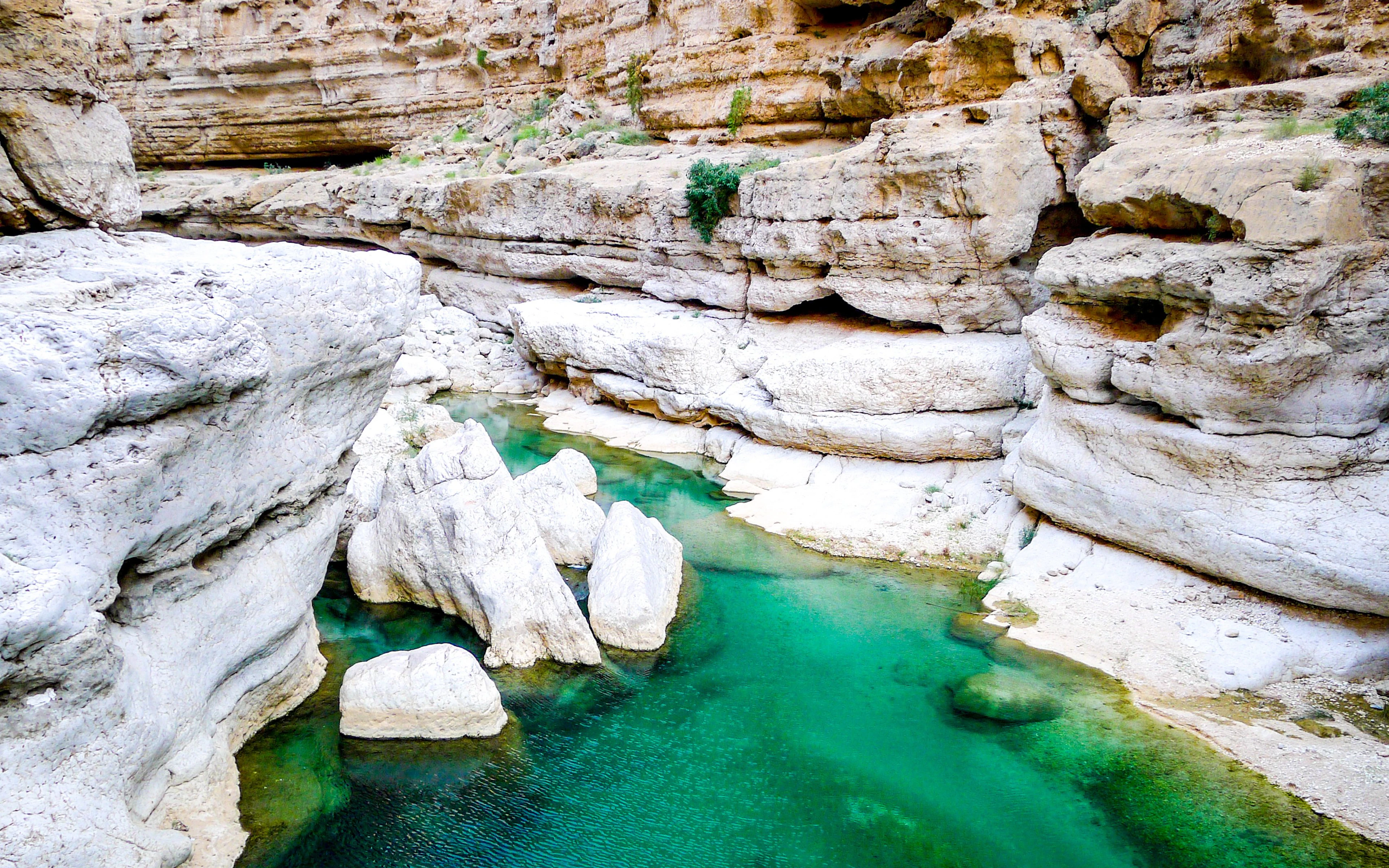
Wadi Shab is the crown jewel of Oman’s Al Sharqiyah region. Located about 90 minutes from Muscat, it is a spectacular limestone canyon where fresh mountain water meets the sea. The name literally translates to "Gorge between cliffs," and that is exactly what you get: a dramatic, narrow valley that hides a series of shimmering pools. Unlike many other wadis that you can simply drive into, Wadi Shab requires a boat crossing and a moderate hike, making the eventual swim into its "hidden cave" feel like a hard-earned reward.
Plan your visit to Wadi Shab Oman
Best time to go
Getting there
- The drive: It’s a smooth, 150km paved drive from Muscat via the Sur Highway (Route 17). You don't need a 4WD; a standard sedan will get you to the parking lot just fine.
- The boat ferry: To start the hike, you must pay 1 OMR ($2.60) for a 2-minute boat ride across the deep pool at the entrance. The local boatmen operate from 8:00 AM to 5:00 PM.
- Pro tip: Keep your boat ticket! It's your "return pass" for the ride back to your car at the end of the day.
The hike & swim: What to expect
- The trek: It’s a 45-minute hike over rocky terrain and through palm groves. It’s not "mountain climbing," but it is uneven. Wear sturdy water shoes—you’ll be transitioning between dry rock and knee-deep water frequently.
- The swim: The trail eventually ends at the water. You’ll need to swim through three main pools to reach the cave. The water can be deep, so if you aren't a confident swimmer, stick to the first shallow pool.
- Pro tip: Bring a waterproof dry bag. You’ll want your phone for photos in the cave, but you have to swim to get there!
Cultural etiquette
- Modesty matters: Oman is a conservative country. While you are in a swimming area, it is respectful to wear a T-shirt and longer swim shorts rather than a bikini or tiny trunks.
- Leave no trace: Wadi Shab is a delicate ecosystem. There are no trash cans once you start the hike, so anything you carry in (water bottles, snack wrappers) must come back out with you.
- Pro tip: There are basic public toilets at the parking lot, but none inside the canyon. Plan accordingly!
Wadi Shab: Beyond the main trail
The "Keyhole" Portal
- The experience: While most call it a "slit," it’s really a natural limestone portal. Reaching the end of the third pool, you’ll find a narrow 2-meter gap where the rock nearly touches the water. To pass through, you must tilt your head and swim through the "keyhole."
- Why it’s worth it: The transition is magical. You move from the bright, open-air canyon into a cathedral-like cavern where the sound of the thundering waterfall echoes off the walls in a cool, turquoise-lit chamber.
The Cave’s Vertical Leap
- The experience: Inside the hidden cave, a worn climbing rope hangs against the rugged wall. For those with a steady grip, it leads to a rocky ledge tucked behind the cascade. This is the ultimate "rite of passage" for the adventurous.
- Why it’s worth it: Jumping from the ledge into the deep, churning heart of the cave pool provides a rush of adrenaline you simply can't find at a hotel pool. It is raw, prehistoric, and completely exhilarating.
The Hidden Terraces of Mibam (Wadi Tiwi)
- The experience: Just a 10-minute drive away lies Wadi Shab’s "wilder sister," Wadi Tiwi. If you have a 4WD, navigate the steep, winding road up to Mibam Village. It is a "vertical" settlement clinging to the cliffs, surrounded by ancient stone houses and emerald banana plantations.
- Why it’s worth it: It feels like stepping back centuries. While Wadi Shab is about the water, Mibam is about the Falaj (ancient irrigation) culture and the incredible hospitality of Omani mountain life.
The "Old Road" Archaeological Walk
- The experience: Before you take the boat ferry at the entrance, look up toward the cliffs. There are remnants of an ancient stone pathway used by villagers for centuries before the modern highway existed.
- Why it’s worth it: Walking just a small section of this elevated path offers a "bird’s eye" view of the entire wadi mouth. It’s the best spot for photography to capture the scale of the canyon meeting the sea, away from the crowds waiting for the boat.
The "Wadi spirit": A desert lifeblood
To enter Wadi Shab is to witness a 1,500-year-old masterclass in survival. As you navigate the canyon, you aren't just walking a trail; you are following the Aflaj irrigation system—a UNESCO-recognized ancient engineering feat. These narrow concrete arteries diverted mountain springs to thirsty desert villages long before modern plumbing existed.
The "Wadi Spirit" is found in the jarring, beautiful contrast of the Omani landscape: the radiating heat of sun-scorched orange limestone set against the startling, impossible cool of emerald-green pools. It is a place that demands a digital detox. It asks you to stow your phone, feel the grit of the boulders under your palms, and reconnect with the sheer, raw power of water in an arid world. In Wadi Shab, nature doesn't just exist; it thrives against all odds.
Visiting from the GCC
Wadi Shab is more than just a local gem; it is the crowning jewel of the inter-GCC road trip circuit.
- From the UAE: A favorite for residents of Dubai and Abu Dhabi, the drive is approximately 5 to 6 hours. Entering via the Hatta or Al Ain borders, the journey takes you through the rugged Hajar Mountains before hitting the stunning coastal highway (Route 17).
- The "Weekend Warrior" Route: Many GCC visitors pair Wadi Shab with a stop at the Bimmah Sinkhole (just 20 minutes away) or an overnight stay in the turtle-nesting sanctuary of Ras Al Jinz.
- Traveler Tip: If you are driving a car registered in another GCC country, ensure your insurance includes Oman coverage (Orange Card). For those flying in, Muscat International Airport (MCT) is a quick 90-minute hop from Doha, Riyadh, or Kuwait City, with plenty of car rental options for the final leg of the journey.
Before you book: What to know
- The "water shoe" rule: This is the most important tip. You will be hiking on slippery rocks, walking through shallow streams, and then swimming. Flip-flops will break, and sneakers will become heavy anchors. Invest in sturdy water shoes with a rubber grip—they are the "all-terrain vehicle" for your feet.
- The swimming requirement: To reach the famous hidden cave and waterfall, you must be able to swim. You will need to cross three deep pools where you cannot touch the bottom. If you aren't a strong swimmer, you can still enjoy the hike and the first shallow pool, but the "hidden" experience will be out of reach without a life jacket (which are rarely available for rent on-site).
- The boat schedule: Access to the trail depends on a 2-minute boat ferry across a deep lagoon. The local boatmen usually operate from 8:00 AM to 5:00 PM. If you stay in the canyon too late, you’ll have a very long, very wet swim back to your car.
- Hydration & energy: There are zero shops or vendors once you cross the water. The Omani sun is relentless, even in winter. Carry at least 2 liters of water per person and high-energy snacks like dates or nuts.
- Dry bag is non-negotiable: If you want those iconic cave photos, you’ll need a waterproof dry bag. You have to swim through the pools to get to the cave, and holding a phone above your head for 15 minutes is a recipe for a very expensive "oops" moment.
- Respect the "Nawa" (flash floods): Wadis are beautiful but can be dangerous. Even if it’s sunny at the coast, rain in the distant mountains can cause a flash flood. If the sky looks dark upstream or the boatmen seem hesitant, do not enter the canyon.
- Modest swimwear: Oman is a traditional society. While Wadi Shab is a tourist favorite, it is respectful to wear a t-shirt and board shorts over your swimwear rather than bikinis or speedos. This is especially appreciated when walking through the palm groves near the local village.
Frequently asked questions about Wadi Shab Oman
While the wadi is "open," summer temperatures in Oman can exceed 45°C (113°F). Even with the water to cool you down, the 45-minute hike over sun-exposed rocks can be dangerous. If you visit between June and August, start your hike at dawn (8am) and be out by noon.
Yes, but with a caveat. The initial hike is manageable for active children, but the swim to the hidden cave is deep and requires stamina. If traveling with young kids or seniors, the first pool is a perfect place to relax while the more adventurous members of the group head to the cave.
Not necessarily, but you need to be mobile. The trail is "moderate." The first 20 minutes are flat and easy, but the final 25 minutes involve navigating narrow ledges and stepping over boulders. It’s more of a "scramble" than a walk. If you have knee issues or a poor sense of balance, trekking poles are highly recommended for the dry sections.
There are basic restrooms at the parking lot (near the boat entrance), but there are no changing rooms inside the canyon. Most visitors wear their swimwear under light, quick-dry hiking clothes. By the time you hike back out after your swim, the Omani sun usually dries your clothes in minutes!
While Oman is becoming more pet-friendly in some coastal areas, bringing dogs into the wadi is generally discouraged. The boatmen may refuse to transport pets, and the sharp limestone rocks and heat can be very hard on a dog’s paws. Additionally, it is a primary water source for local villages, so maintaining water purity is a priority.
They are referring to the Bimmah Sinkhole (Hawiyat Najm). It is only 20 minutes north of Wadi Shab. Most people visit the Sinkhole first for a quick 30-minute photo op and a dip, then head to Wadi Shab for the "main event" hike. It’s the perfect "Double-Oasis" day trip.
The wadi itself is free, but the "gatekeeper" is the boat. You must pay 1 OMR ($2.60) per person for the round-trip boat ferry. This is a cash-only transaction, so make sure you haven't left your wallet in the hotel safe!